Showing posts with label history. Show all posts

Friday, July 22, 2011

A Brief History of Men's Shirts from 1900-1949

Something I've always been interested in as you know is the evolution of clothing. I'm always curious to know things like how this:
approximately 1840
Turned into this in a period of 20 years:
1860

Now granted men's fashion has changed a bit more slowly than women's fashion in the past few centuries, but we can all agree that it has still evolved fairly quickly.

1810
1910
2010
(Nancy note: This girl lived the next town over from me and went to my rival high school at the same time as me. She was even on our rival cheerleading squad. Please don't think any less of me...I promise no one else from that area talks like her.)
But all joking aside I could write a book on how men's fashion has changed in this century alone, but what I'd like to do today is talk about how a man's everyday shirt has changed since the beginning of the last century.

1900s:
Ca. 1900s (1907ish)
Here's an example of a pretty typical late 1900s shirt. There is a high detachable wing collar (rounded) and two cuff options. The sleeve plackets are pointed and the yolk is straight. This is what is called a "coat shirt" because if the fact that it opens all the way down to the bottom and can be slipped on like a coat.


The type of work shirt you wore, like today, depended on what you did for a living. Business men typically wore suits and white shirts of finer material while day laborers wore more colored shirts of much sturdier fabric (color hides stains and dirt). A man had many shirt patterns and colors available. Polka dots, double stripes and single stripes were popular as well as the traditional white.

Both acceptable shirting fabrics. 

Collars came in detachable variations like the shirt pictured above and rarely softer attached collars. In the early 1900s collars were much more popular as they increased the longevity of the shirt. Shirts were still yet to be mass produced and a gentleman typically had less than a weeks worth of shirts in his possession at any given time. You will also note above that the collar is quite high. This is left over from the late Victorian era, but as we approached the end of the decade shirt collars start to shrink in height.

1910s:

 late teens (source)
So this is a Negligee shirt or what I would call a semidress or casual shirt. It is not a night shirt. That's something completely different. (Nancy note: the term negligee doesn't become associated with bedroom attire until 1930s.) This shirt also has a detachable collar option and what's called a front-plait opening down the front. The placket ends a little more than midway down the shirt and the shirt is meant to be slipped over the head, though the pattern does give you the option to make it a coat shirt. The neckline is still quite high, but lower than the previous shirt. The rounded collar was still the more popular style at this time, but it would be going out of fashion shortly.

There are two versions of the shirt pictured above. The far left is the negligee version, the center collarless version is what's called an outing shirt. This shirt could also be considered a work shirt if it was made with a sturdier fabric. The type of shirt at this time was determined mostly by the fabric used. Lighter fabrics for casual wear, slightly heavier fabrics for casual wear, and sturdier still for work shirts. The pointed yolk was typically found on casual shirts like these, but on occasion it would pop up in more formal wear.

From a Guild to Making Shirts reprinted 1928 

Many colors were still popular at this time. Stripes, half stripes, and even on occasion checked fabrics were worn.

1920s:
Early 1920s
This shirt features a slightly more modern look. You still have the option for a detachable collar, but the main image of this pattern shows a pointed attached collar. Even the detachable collar is slightly pointed. The shirt again gives you the option of coat shirt style opening or front-plait style opening. There are two cuff options including a detachable reversible soft cuff.

During the 1920s the silhouette of the shirt begins to change due in part to improved manufacturing techniques. Shirts become more fitted, with straight fitted sleeves. French cuffs are the norm. Pointed soft attached collars become more and more widespread thanks to the invention of the home washing machine. Rounded detachable collars are still popular among the older population, but for the trendy folks pointed collars become the normal shirt for business wear. They were secured with collar studs or pins and a tie. Detachable collars are still popular among day laborers for their ease of care and increased shirt life.

1930s:

source
Now we're cooking with gas, as they say. This is really starting to look like today's men's shirt. This pattern only gives the option of the coat shirt opening. Plait-front shirts are pretty much obsolete. The placket still ends quite high on the shirt, but this is in accordance with the pants style of the 30s in which a high waist was preferred.

French cuffs, pointed sleeve plackets, and a longer shirt collar point are all features of this particular shirt. Also popular at this time. Collar stays!


Which were really more like tie clips, but still amazingly effective. Clip stay to tie and each side of collar and voila! Collar stays put all day long. Genus says I.

1940s:

The 1940s bring with it an explosion of different styles of shirts. Shirts become more and more casual. Short sleeve shirts are very stylist for casual wear, sport wear and even work wear.


Fabric choices explode. Flannel, cottons, rayon, prints, prints, prints, and more prints all become popular for work and casual wear.


Western shirts become popular in the late 30s and into the early 40s. This is caused the increased popularity of western movies and stars like John Mack Brown, Red Berry, Harry Carry, Jr. and more. I have a secret love for these, but Mr. Fiance has promised me he will never wear one. Bummer. 


The button down business shirts stay about the same. Detachable collars disappear and the softer pointed collar firmly cements its place in men's fashion. Shirt tails become shorter and plackets extend as the waist on men's pants lowers.

And that, my lovely friends, is that. If you found this helpful drop a comment in the comment section below. Next post: 1950s-1960s.


If anyone was confused by some of the terms I used in the post here's a helpful diagram.

source


Additional References and Some Good Supplemental Reading Recommendations:

Tuesday, December 14, 2010

Autochromes!

So today is the day that I have been looking forward to for a loooooooooong time. Autochromes!

Anna Stocká by Josef Jindřich Šechtl ca 1909. This photo is the earliest known autochrome of Šechtl's. The lady in the photograph is his future wife Anna. This is my favorite autochrome of all time and it is currently in the collection of the Šechtl & Voseček Museum of Photography. I am especially fond of the soft pale blue color of her dress and her beautiful wide brimmed hat.  

I'll start with an explanation of what an autochrome is. An autochrome is a color photo printed on glass using potato starch. Crazy right? The process was invited by Auguste and Louis Lumière (the same Lumière brothers who invented the motion picture camera the cinématographe). The process was patented in 1903 and was used as late as the 1930s.

The process used a screen of tiny potato starch grains dyed orange-red, green and violet. The grains were dusted onto a glass plate and then covered with a layer of panchromatic silver bromide emulsion. As light entered the camera it was filtered by the dyed grains before it reached the emulsion. The exposure time for one of these images was very very long, but the result was a semi opaque positive color image on glass that required no further printing.

Close up of Autochrome approx 1911
While working at the George Eastman House International Museum of Photography and Film I was very fortunate to get to look at some autochromes up close. They need to be viewed on a light table to be seen properly, but I can tell you that the colors are even more vivid and stunning than the images in this post. It is very difficult to reproduce autochromes as digital files true to color because of the nature in which they are printed.

Autochromes are composed of a series of tri-colored dots (as you can see in the image above) that work like a video screen. Because the dots are so small and so closely packed together the colors of adjacent dots blend together in our eyes. Light from neighboring red and green dots will create a yellow color and like from violet and green dots will make a light blue. Neat, right?

I've included some of my favorite autochromes here, but I strongly encourage you to do a quick search online for others. It's amazing how well these images have held up over time and I just love getting to see the actual colors of frocks from the 1900s and teens!

Couple ca. 1910 by Mrs. Benjamin F. Russell. 
This lady is subscribing to a more relaxed fashion than the lady at the top of his post even though the photos were taken at relatively the same time. She's equally stunning in my opinion. I love the color of her frock, the simple cut, her matching pink scarf, and her cute hat. What do you think, Readers? Is that an engagement ring on her finger there?

Woman wearing red dress with houses in background ca. 1915.
 I find her up-do to be very lovely and her shoes to be very charming. It's a little hard to see but she is wearing a high lace collar and sleeves with lace cuffs. There are a ton of little button details up and down the front and sides of her dress that remind me of traveling coats from this era. I'm not sure what this frock is made out of, but the fabric is obviously quite thick and heavy. Canvas maybe? The way the fabric wrinkles around the skirt hem makes me lean more towards a heavy plant based fabric than an animal fabric.

Dancer wearing Egyptian-look costume with wings reaching to the floor ca. 1915
This would have been at the height of Egyptian fever, though still previous to the discovery of King Tutankhamun's tomb. As with most images from this period I could find out very little information about the woman in the photo and why she might be wearing this getup. Perhaps she is a dancer, though for what type of production I couldn't say.

Cowgirl by Mrs. Benjamin F. Russell  ca. 1910.
I love her! I love this image!  This autochrome is in the George Eastman House collection, Rochester, NY. I love her big hat and giant rodeo pants. I suspect this is more of a masquerade outfit or show outfit than actual work clothes, but I'm totally cool with that.

Lady Helen Vincent by Lionel de Rothschild ca 1910.
Lady Helen was apparently a society beauty and wife of the diplomat Sir Edgar Vincent. I am swooning over her beautiful pale pink dress with the lace sleeves. Just look at the lacy detail down the front of her skirt and the black belt around her waist is so classy.

Man and women carrying suitcases by Charles C. Zoller  ca 1907 - 1932.
I'm going to go ahead and guess that this print comes from 1918-1922 based on her dress and his sweater and tie. The only thing that keeps me from pinning this a few years later is the lack of make-up on her face. The early 1920s saw a huge swell in make-up usage with the widespread post-war availably of cosmetics. What do you think, Dear Readers? What time might this couple have lived in?


Unknown photographer, subject, and date... but wow. Just wow. Look at that dress! And look at those plumes on that hat! Look at that lace on her blouse! If this lady's attire doesn't scream fashion I don't know what does. Makes a girl want to start making Edwardian clothing doesn't it?

Seneca Pool 1924 ca. 1924
I really love these cute 1920s bathers. This pool was actually located not too far from where I went to college, but it has since been filled in. Look at how the ladies are mostly in dark wool swimsuits, but they wear brightly colored swim caps. I didn't realize that there were so many different cap color options when I wrote my 1920s swimsuit post. You learn something new every day. 

Thursday, October 28, 2010

A 1930s Trousseau

This is a cross post from my Wedding Blog over at Wedspace.com, but I thought you all might get a kick out of it. I guess I've got 30s on the brain again. I hope you enjoy!

Delineator Cover ca. 1932 (I think)

Trousseau. Not a term we tend to use very often anymore. I'm sure there are plenty of Brides who have never even heard of the term "trousseau." So what is it and why was it important?

Lets think back to the days before feminism. Back to the days when women were not expected to work more than part time outside the home. The American Heritage Dictionary defines the word trousseau as:

trous·seau, n. [French, from Old French, diminutive of trousse, bundle. See truss.] The possessions, such as clothing and linens, that a bride assembles for her marriage.

In short it was those items such as bed linens, napkins, clothing, crocheted doilies, candlesticks and anything else that a woman was going to take with her into her husband's home. The concept is similar to that of a Hope Chest. You fill a box with all those things you'll need to for married life.

This isn't a very popular practice anymore. Most women today work full time and we simply purchase what we need when we need it. Our culture is also not one that focuses on preserving items long term. How many of us buy a dress at Express or Kohls with the expectation of carefully storing it, always wearing a smock or apron over it when working in it, carefully altering it by hand when size adjustments must be made, and with the intent to wear said dress for the next 15 years? Certainly not me.

In the 1930s the Trousseau was a very common practice and many magazines for young women had lists suggesting what one should include. Here is a list from the April 1930 Good Housekeeping magazine.

Trousseau Budget 1930
White Satin Wedding Gown - $39.50 (about $496 today)
Tulle Veil (3 yards at $3.25per yard) - $9.75 (about $122)
Going away 3-piece suit - $16.95 (about $214)
Afternoon Dress for Formal Parties - $29.50 (about $375)
Street Dress of Silk or Wool - $25.00 (about $314)
Coat in Tweed or cloth - $39.50 (about $496)
Sweater, Cardigan, and Skirt Costume - $16.75 (about $210)
Washable Silk Sports Frock - $6.95 (about $87)
Sleeveless picque Dress with Jacket - $10.75 (about $135)
Lacy Diner Dress with Jacket - $25.00 (about $314)
Evening Wrap (to be made at home) - $15.00 (about $188)
Two Hats, One of Felt, One of Straw - $18.00 (about $226)
Shoes: Street, Afternoon, Evening Slippers, and One Pair of Bedroom Slippers or One Pair of Mules - $33.50 (about $420)
Negligee in Satin or Silk - $15.00 (about $188)
Lingerie, Girdles, and Stockings - $65.00 (about 816.00)
Accessories: Bag, 4 Pairs of Gloves, and 1 Dozen Handkerchiefs - $20.00 (about $251)
____________
Grand Total: $386.15 or about $4,848 in today's money.

Note that this was published in April 1930, about 7 months after the great stock market crash that started the Great Depression in the United States.


The September 1933 issue of the Delineator Magazine suggests a similar Trousseau, but one that's slightly more affordable. The magazine focused on needle work, dressmaking, and millinery. They were know for providing images of the latest fashions with just enough information to recreate a similar look at home. Making your own Trousseau was often much more reasonable pricewise. The September 1933 Delineator gives us this illustration and description.

A 1933 Trousseau
"The going-away outfit. She chooses a suit for a dramatic get-away. Or, if she is marrying simply, at the City Hall, she wears this for the ceremony, too. It is eel brown ribbed wool and the fur is flattering blue fox." "Her wool gadabout frock. For this backbone-f-the-trousseau frock she hits on olive green, with the touch of satin that is inevitable on smart wool frocks. The beret and the gloves are sating too." "Her dress-up frock. It's satin-and she uses the dull side for the dress itself, the shiny side for the small touches. It would be marvelous in rosy red, but every bit as smart in black or eel brown.

"A go-with-everything wrap. It's a wager one-the smartest wrap of the year. It belongs to her white frock but it's worn with the dinner dress, too. If she prefers a contrasting fabric, we suggest velvet or bengaline." "Her 'grand' evening frock. To look grandest, this season, white satin is the thing at night. That's why we urge it for this frock with the Vionnetish neckline. The wrap belonging to this dress is the black one." "And this for small evenings. A dress that can take dinners, dancing, the theatre, or any other kind of 'don't dress' evening in its stride. It's black satin and the coat of the white satin frock will go perfectly with it."

So if one were so inclined what would one include in their modern day trousseau? Susan Breslow Sardone recommends new clothes, sports wear, vacation wear, and luggage. She suggests that you keep your trousseau true to your personal style. Don't think of it like an image make-over, you're just collecting things that you will need.

I can tell you that my "trousseau" consists of several mismatched dish sets from college, banged up clothing from high school and art school (mostly covered in paint), and two pairs of twin sheets. Oh, and about 3 bath towels.

-Nancy

Thursday, June 10, 2010

The 1920s Swimsuit


So with no camera there really isn't much for me to post concerning Operation Ruby Shorts. There's no real progress to report since I've taken the last few days off. My Beau and I have spent the last couple of days getting our files in order. I know you may all find this hard to believe, but I've never had a filing cabinet before. I've always had a box. This was apparently not acceptable. Beau has lots of filing experience so he's been taking the lead on this project.

I did want to report that Ali over at The Wardrobe, Reimagined has finished her Rubys! So cute! And she posted a great Ruby Pattern Translation over at her blog. Check it out if you plan to make these some time.


Ali's Rubys came out fabulously! I only hope mine are similarly successful. I'm still crossing my fingers and hoping that the length will be okay. I'd like these shorts to be more mid-thigh, and so far signs are good.

In any case after Tuesday's Vinspiration this week I was struck with a thought. I know nothing about swimwear pre-1940s. I could go on and on and on about frocks, tennis suits, hats, even unmentionables from the 1920s and 1930s. I'm even planning on putting an authentic 1920s make-up tutorial on my blog, but I really only had a vague picture of swimwear of the time in my head. What did ladies wear to the beach once they'd thrown off their corsets and layers of petticoats?  Have I been missing some fabulous fashion statement all this time? Is there a 1920s swimsuit design out there somewhere that desperately longs to be recreated? I had to know!

So I sat down, did a little research, found some really cute photos and decided to share. I present to you swimsuits of the 1920s.

First a little history. Sorry. You guys know me by now. I have to do it. In the 1900s bathing suits tended to look like the photo above. Long skirts, paired with long bathing stockings and bathing shoes.  I have to say that these would make a very cute day dress today, but I digress. The suits were normally made out of wool or mohair and were normally black or very dark blue with a little colored trim. I have trouble picturing wearing one of these in the heat of summer under the intense beach sun. All I can think is "oh goodness, hot." But they are cute, really cute. I could picture one of these suits in a lightweight cotton and wearing it on a boating trip today.  

As the 1910s progress hemlines get shorter and more colors begin to appear. A long tunic top with a pair of knee length shorts seems to be a popular style post WWI. Black goes almost entirely out fashion, though white with black stripes becomes quite popular. The sailor suit has a moment in the sun during the 1910s are well. 

Bathing suits begin to really shorten in the early 1920s. Pants suits or play suits become more popular and began appearing on beaches all over the country. 

The suits really seemed to have looked like the men's bathing suits of the past decade. They definitely fit within the square boxy lines of the fashionable 1920s lady's silhouette. There's a definite de-emphasis on the breasts and waist. Bathing stockings become shorter bathing socks, revealing the legs around the knee area. Swimsuits were still being made of wool, but they definitely look much more comfortable for beach going. I'm a big fan of the lady second to the left. If I were to make an early 1920s swim suit, I would definitely base it on hers. The white stripe around her collar and skirt hem is just darling! 


As the 1920s progress the suits shorten even further revealing the upper thigh. Necklines begin to lower. Quite scandalous to the older generation I am sure. 


By 1925 the general shape of the swim suit for the next two decades was fully formed. These ladies above have obviously already been in the water and you can see a definite design flaw with the suits of the time. Stretch. Wet wool is very heavy and I can just imagine that these suits got longer and longer as the day progressed. If I were a lady of the time I don't think I'd ever get in the water. I'd have rather sat on the beach and looked pretty all day. By the late 1920s wool was still by far the most used swimsuit material. I suppose because of it's natural ability absorb moisture. 

I must say that I found my swimsuit expedition very fun. The overall shape of the 1920s swimsuit is not very flattering to the modern eye. That's mostly due to the fashions of the time and the limitations of the swimsuit materials. Still I can definitely envision one of these in my future just for the pure fun of it. The girls in this photos look so full of life and energy. I love it!


Thursday, April 29, 2010

New blog name and some color.

As you may have noticed I've finally changed the name of my blog. I decided to go with 25 Dollar Vintage or $25V for short. I think it expresses what I'm trying to do while still leaving room for me to blog about other things in my life. Okay, I confess. I totally picked this name so I could use my cute little semi-acronym. $25V. How cute is that? Expect a new banner soon. I just need some time to sit in front of InDesign and plug one out.

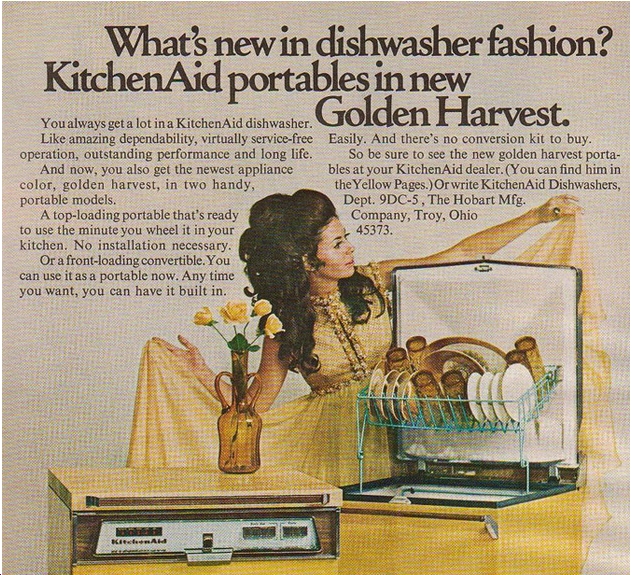
Also need to think about changing the blog colors. I'm totally leaning towards the fabulous 60s and 70s Harvest Gold/Avocado Green combo. Come on, you wish you could still get your dishwasher in fabulous colors like this!


I always wear my fancy matching harvest gold gowns when using my dishwasher. Who doesn't? Seriously.

All joking aside I do quite enjoy the updated summer yellow and lime green color combo that's been floating through home stores for a few years now. My kitchen is furnished in greens and yellows, soft and modern versions of everyones favorite 1970s kitchen sets. I do not have a green dishwasher, but my hand towels, pots and baking dishes as well as kitchen decor all follow along those color lines.

I've always found it interesting how in one way color dates us, but yet it's still so cyclic. Think of how today's incredibly popular sky blue and brown color combo will look to us in 10 years. I'll tell you how it will look, dated.


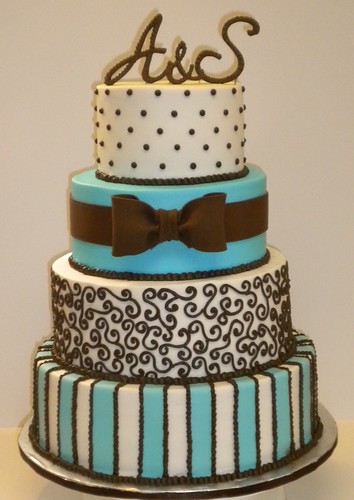
But I'm fine with that. I like my yellow and green kitchen. I know many people who love their brown and blue and I've always been a firm believer in doing what makes you happy today. Sure it's important to plan for the future, but should that really extend to your home decor? I think the answer is no. If it's beautiful today go for it. Have that Blue and Chocolate Brown wedding if that's what's going to make you happy. Eventually every color combo is going to go out of style, but as I said these things are cyclic. What's out of style today will come back at one point or another.

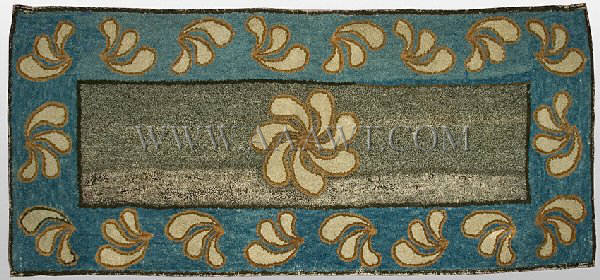
Want proof? Do a quick search for vintage 1960s fabrics. I bet you'll come up with more than a few in the brown and blue category. The B&B color combo were also popular in 1930s and the early 19th century. Here is a BEAUTIFUL hand made rug from the early 19th century. (If anyone's interested it's currently retailing for 21,000 dollars)


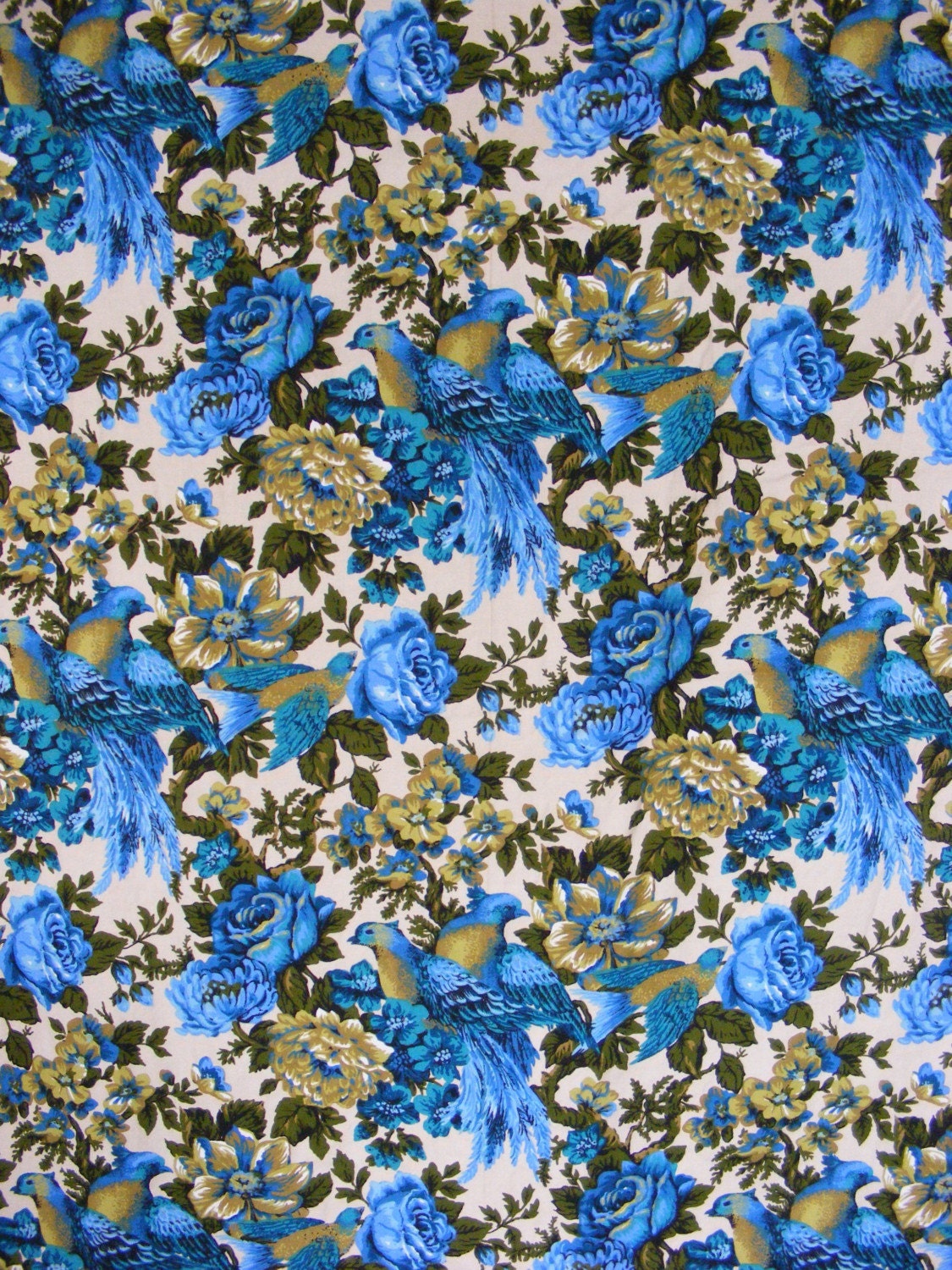
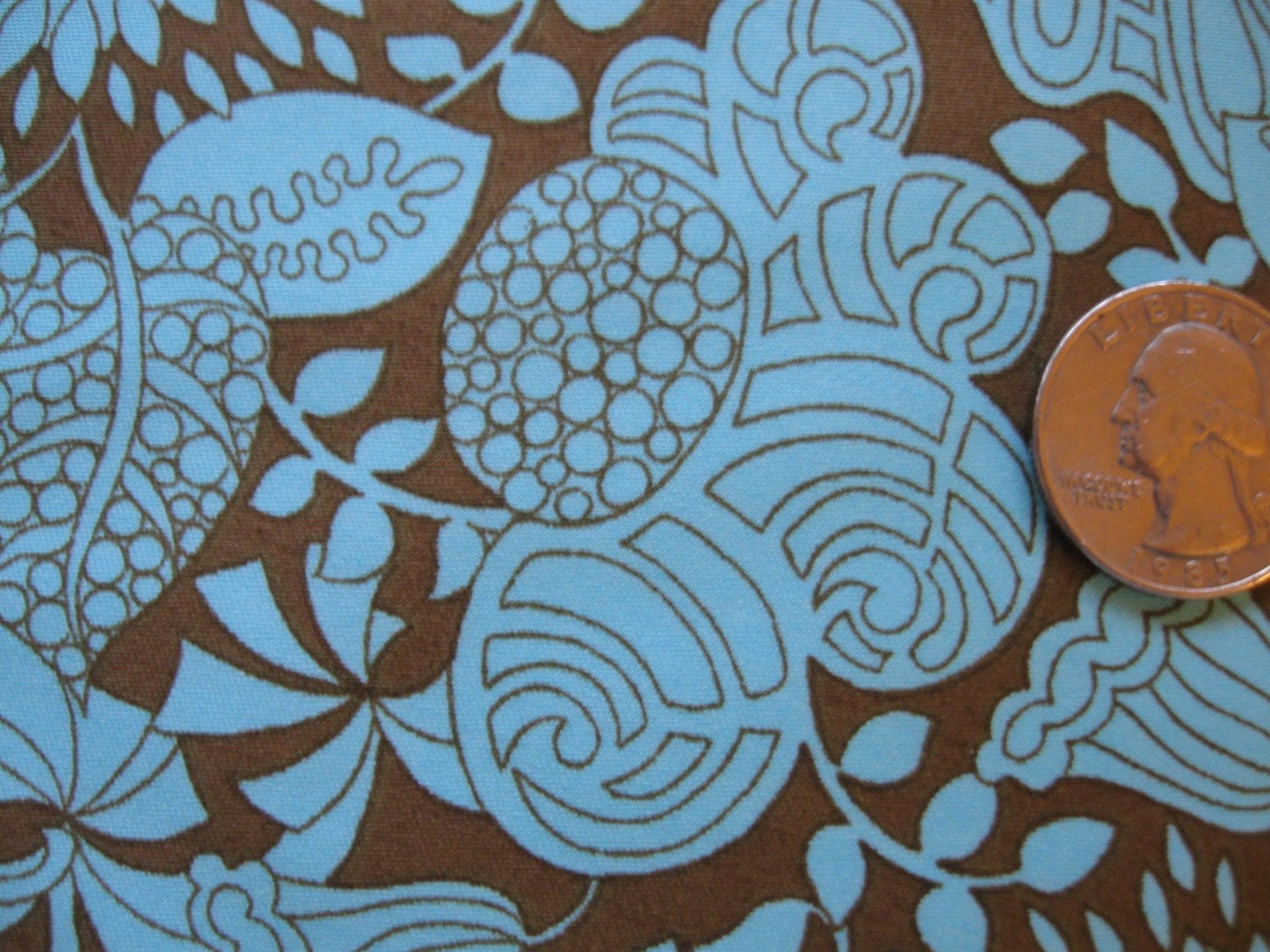
Or how about these vintage fabrics I found on etsy?

 
The seller didn't list a date for this fabric, but judging by the design I'd probably put it somewhere in the 1960s. Please correct me if I'm wrong here. I'm no textile historian. Or how about this beautiful 1930s feed sack fabric? Could you just die?


You'll find a surprising amount of fabrics from the depression era in Blues and Browns. Check out this stunning 1960s Blue/Brown fabric. Wouldn't you just love to have this in your home today?  


(Here's a heads up, the seller has 8 yards of this for sale! It doesn't quite fit in my challenge budget, but I hope someone else can utilize it.)

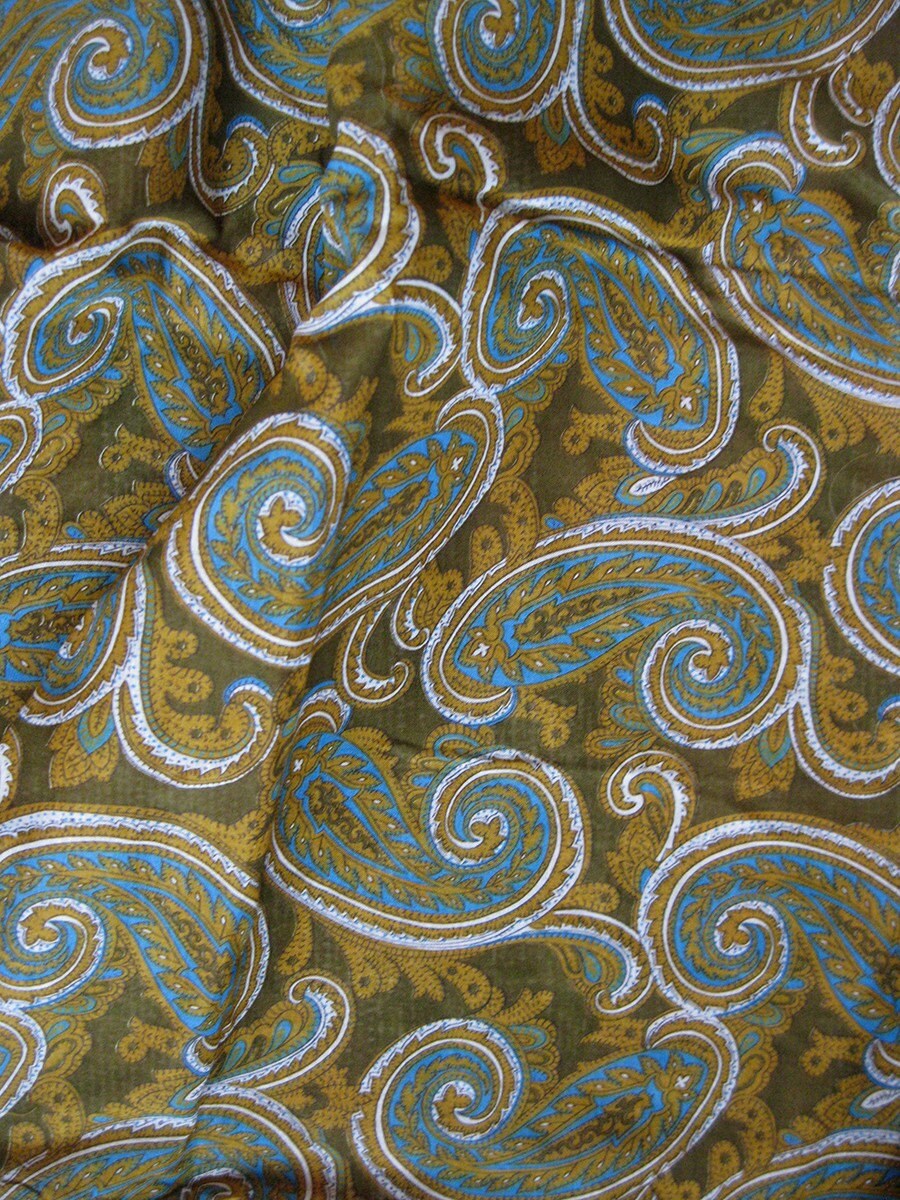
Here's some 1970s fabric from Switzerland.


Paisley anyone? I know my father own a shirt made out of this fabric at one point in his life.


Moral of the story: buy whatever colors you want! Even if they go out of style, chances are you'll see those colors in vogue in your lifetime.

So, why spend all this time on one color scheme today? Colors are very important when making recognizably vintage clothing. Take note of how the 1960s blues are darker and less turquoisie, the browns are a bit more orange. The 1930s blue is very dark and the brown is a little more murky (granted that image is off colored slightly). You're not going to get the same look from a piece of modern sky blue/chocolate brown fabric.

The design, fabric choice and the color have a powerful ability to invoke a certain time and place. It all depends on how authentic you want to go. A 1940s shirtwaist dress in a cheery floral rayon is going to invoke a different time than the same dress in a bright pink cotton knit fabric.


Vs.


Do a little research before you pick a fabric for your vintage pattern. See what people were actually wearing at the time. Think about how retro you want to go. Do you want to be 100% accurate or do you want to use a fabric more common to a modern film set? Something people will immediately recognize as a 1940s print? Even if it's not completely accurate? Or you might be like me. I like to use modern fabrics with vintage cuts and I hardly ever worry about picking an accurate piece of fabric. I'm much more likely to go for something like the knit and an updated pinup/rockabilly look than an accurate look.

After you've thought about that and come to a decision then go to the fabric store, shop or flee market. Planning is just as important as the construction.

Happy sewing : )